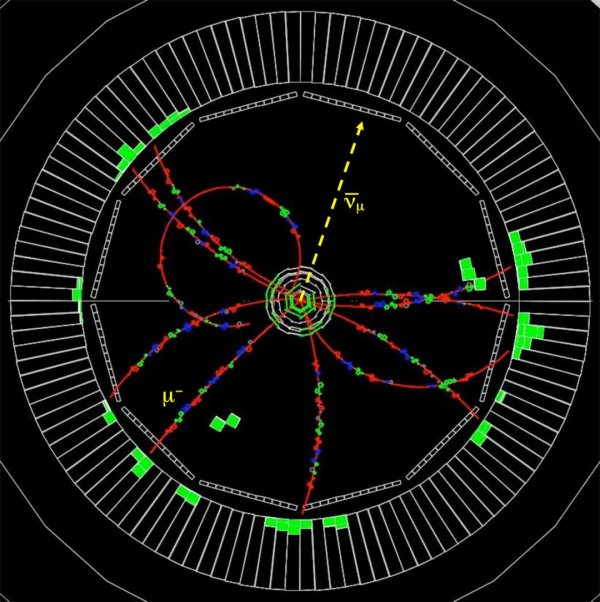
An international collaboration of physicists has uncovered a potential crack in the Standard Model of particle physics, the theoretical framework that has governed our understanding of matter for decades. The finding, published in the journal Nature, stems from a reanalysis of data collected at three separate particle accelerators, revealing that tau leptons—heavy cousins of electrons—decay more rapidly than the prevailing theory permits.
The anomaly challenges a cornerstone principle known as lepton universality, which holds that all charged leptons (electrons, muons, and taus) interact with other particles in identical ways, regardless of their mass. If confirmed, the discrepancy would mark the first observed violation of this symmetry, potentially opening the door to a more complete theory of physics.
A Statistical Hint of New Physics
The team, led by researchers at the University of California, Santa Barbara (UCSB), pooled data from the LHCb experiment at CERN in Switzerland, the BaBar detector at the SLAC National Accelerator Laboratory in California, and the Belle experiment in Japan. Each experiment independently recorded tau decay rates that exceeded Standard Model predictions. Combined, the results deviate from theoretical expectations by four standard deviations—a statistical significance corresponding to a 99.95% confidence level.
While particle physicists typically reserve the term "discovery" for a five-sigma signal, the consistency across three independent facilities strengthens the case that the effect is real, not a fluke of any single detector. The UCSB team noted that the agreement among the experiments makes the finding particularly compelling.
Why Taus Are Tricky
Tau leptons are notoriously difficult to study because they decay almost instantly, within about 2.9 × 10⁻¹³ seconds. Electrons and muons, by contrast, are stable or long-lived enough to be measured with high precision. "The tau lepton is key, because the electron and the muon have been well measured," said Franco Sevilla, a physicist at UCSB and a co-author of the study. "Taus are much harder because they decay very quickly. Now that physicists are able to better study taus, we're seeing that perhaps lepton universality is not satisfied as the Standard Model claims."
This new experimental capability, driven by advances in detector technology and data analysis, has turned taus into a frontier for testing the Standard Model's limits. If the deviation holds up, it would imply that an undiscovered particle or force is influencing tau decays—something the current model cannot accommodate.
Implications and Next Steps
The potential breakdown of lepton universality would have far-reaching consequences, as the Standard Model's principles are deeply interconnected. A change in one sector could ripple through others, requiring a fundamental rewrite of particle physics. However, the researchers are cautious about overinterpreting the results. "We're not sure what confirmation of these results will mean in the long term," Sevilla said. "First, we need to make sure that they're true, and then we'll need ancillary experiments to determine the meaning."
The path forward involves not only replicating the measurement with higher precision but also designing new experiments that can probe the underlying cause. The LHCb collaboration has already begun upgrades to increase its sensitivity, and future facilities like the Belle II experiment in Japan are expected to provide further clarity within the next few years.
For now, the finding stands as one of the most tantalizing hints of physics beyond the Standard Model in recent memory. Whether it marks the dawn of a new era or a subtle experimental artifact, the scientific community will be watching closely as the data accumulate.