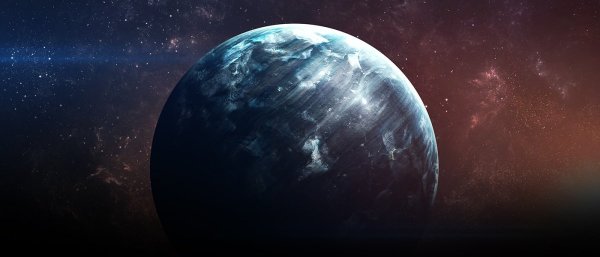
For years, astronomers have puzzled over the possible existence of a ninth planet lurking far beyond Pluto. Now, a new study proposes that this mysterious world, if it exists, might not have been born in our solar system at all. Instead, it could be a rogue planet—a wandering body that was pulled into the Sun's gravitational grasp after drifting through interstellar space.
Researchers James Vesper and Paul Mason of New Mexico State University presented their findings at the American Astronomical Society meeting, and the work has been published by the American Astronomical Society. Their simulations suggest that such a capture is not only possible, but may be more likely than previously thought.
Simulating a Cosmic Encounter
The team ran 156 computer models to test how a rogue planet might interact with our solar system. They assumed the rogue would be roughly ten times the mass of Earth, similar to the size proposed for Planet Nine. The results showed that in 60 percent of the simulations, a rogue planet would pass through the system, sometimes dragging a smaller or dwarf planet along with it. But in the remaining 40 percent of cases, the Sun's gravity would capture the interloper, leaving it to settle into a distant orbit.
That orbit, the researchers note, would place the captured world at roughly 1,000 astronomical units (AU) from the Sun—far beyond Pluto. For context, Earth sits at just 1 AU. The simulations also suggest that such a planet would likely be no larger than Neptune, as a bigger body would have caused noticeable disruptions in the order of the solar system.
The Hunt for Planet Nine
Planet Nine was first proposed two years ago, based on observed gravitational patterns in the Kuiper Belt, a region of icy bodies beyond Neptune. Those patterns hint at a massive object pulling on nearby objects, but direct evidence remains elusive. The new study offers a plausible origin story, but it does not confirm the planet's existence.
Computer simulations are a critical tool in this search, as they rely on known data and can test scenarios that are impossible to observe directly. Still, they have limits. Right now, astronomers cannot even confirm whether Planet Nine is real, let alone determine its origins.
Better Tools on the Horizon
To close that gap, scientists are building more advanced instruments. The James Webb Space Telescope (JWST), completed late last year and slated for launch in 2018, is expected to dramatically improve our ability to observe distant objects. Its large mirrors and sensitive lenses will allow astronomers to peer deeper into space than ever before.
Whether JWST will be the instrument to finally spot Planet Nine—or confirm it is a captured rogue—remains to be seen. For now, the simulations provide a compelling new angle on one of the solar system's most enduring mysteries.