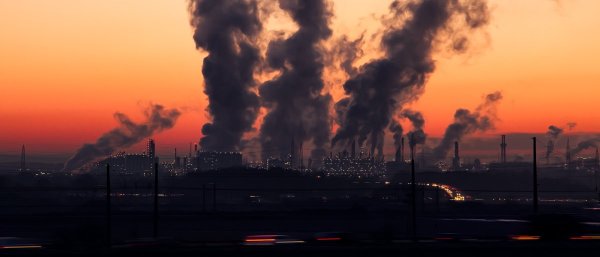
China, the world's largest emitter of greenhouse gases, is repositioning itself as a central player in the fight against climate change, with a series of policy shifts and investments that are beginning to reshape its energy landscape. The country, home to 1.35 billion people, has historically produced twice the carbon dioxide emissions of the United States, largely from coal burning. Yet recent government data and international reports indicate a measurable decline in coal consumption and a rapid expansion of renewable energy capacity.
The urgency of the transition is underscored by global climate trends. Atmospheric carbon dioxide has surpassed 400 parts per million, a level not seen in at least 800,000 years, according to scientific records. Average global surface temperatures have risen by about one degree Celsius since 1880, with 15 of the 16 warmest years on record occurring after 2001. The year 2014 set a heat record, only to be surpassed by 2015, and 2016 appeared to be even warmer. Arctic ice has shrunk markedly, and sea levels have climbed 6.7 inches over the past century, intensifying coastal storm damage. These changes are linked to fossil fuel consumption, and unchecked emissions are expected to increase risks of extreme weather, drought, and food shortages.
China's response has been multi-pronged. In 2014, the government cancelled plans for 104 coal-fired projects across 13 provinces. It also introduced a cap on coal as part of its commitments under the Paris Agreement, with a stated goal of peaking carbon dioxide emissions by 2030. The National Bureau of Statistics reported a 4.7 percent drop in coal consumption in 2016, a sign that the policy is taking effect. The International Energy Agency's World Energy Outlook Report estimates that China's coal use likely peaked in 2013 and has been declining steadily since.
Renewables Take Center Stage
To accelerate the shift, China has launched a $474 billion renewable energy program, with $361 billion allocated to renewable fuel development by 2020. According to the National Energy Administration (NEA), solar energy production more than doubled in 2016, reaching 77.42 gigawatts of capacity and generating 66.2 billion kilowatt-hours of power. That made China the world's largest producer of solar energy in terms of installed capacity. The NEA's development plan calls for adding over 110 gigawatts of additional capacity by 2020.
Beyond solar, China is addressing its mounting waste problem with energy generation. The Shenzhen East-to-Waste plant, currently under construction, is set to become the largest waste-to-energy facility in the world. It is one of 300 such facilities that generate sustainable energy while reducing landfill reliance. The plant is scheduled to come online by 2020. Although waste-to-energy processes produce some carbon dioxide emissions, its role in waste reduction makes it part of China's broader green strategy.
The combination of policy, investment, and measurable results suggests that China's energy transition is gaining momentum. While challenges remain, including the scale of its coal legacy and the need for continued emission cuts, the country's recent trajectory offers a notable example of how a major emitter can pivot toward cleaner energy. The global implications are significant, as China's actions will heavily influence whether international climate targets are met.