
Noise from Military Jets Drives Rare Lizards to Eat More, Study Finds
A new study reveals that Colorado checkered whiptail lizards, an all-female asexual species, overeat and reduce movement when exposed to military jet noise. The research, published in Frontiers in Amphibian and Reptile Science, shows measurable physiological stress responses in these rare reptiles.

Nuclear Regulators Clear Path for Compact Reactor Deployment
The U.S. Nuclear Regulatory Commission has approved the design for NuScale Power's small modular reactor, the first such approval in the nation. This decision allows utilities to apply for construction permits, though safety reviews and cost concerns remain. The first units are expected to come online by 2029, potentially reshaping the country's nuclear energy landscape.

Bitcoin's Energy Appetite Sparks Debate Over Sustainability
A November report found Bitcoin activity consumes more electricity than 159 countries, raising concerns about its environmental footprint. Experts debate whether efficiency gains or renewable sources can offset the network's massive energy use, with some proposing alternative verification systems like proof of stake.

Germany's Power Grid Hits 95% Renewables on a Sunny, Windy Sunday
On May 8, Germany's grid reached a new milestone, with renewables supplying 95% of electricity at midday. Solar and wind led the surge, underscoring the country's progress in its Energiewende policy. The achievement highlights both the potential and the weather-dependent nature of renewable energy.

Bezos Outlines Blue Origin's Path to Space Settlement
Jeff Bezos, in a Washington Post interview, detailed Blue Origin's progress and his vision for humanity's expansion into space, emphasizing resource extraction and nuclear power as keys to enabling millions to live and work off Earth.

Arizona State Team Creates First White Laser Emitting Full Visible Spectrum
Researchers at Arizona State University have built the first white laser, emitting the entire visible spectrum from a single semiconductor alloy. The breakthrough, published in Nature, could lead to more energy-efficient lighting, brighter displays, and faster Li-Fi data transmission.

Regrowing Human Limbs: The Science, Hurdles, and Timeline
Scientists studying salamanders and flatworms are uncovering the mechanisms behind limb regrowth, but significant obstacles remain. From complex genomes to slow growth rates, the path to human application is still long. This article examines the current state of regeneration biology and its potential.

Canadian Team Uses Diamond to Tame Quantum Light at Room Temperature
Researchers in Canada have demonstrated a room-temperature quantum memory in diamond that can alter the color and bandwidth of ultrafast single photons. This breakthrough could help stabilize quantum states and enable more practical quantum computing applications.

Tau Particle Decay Anomaly Challenges Core Physics Assumption
An international team, led by UC Santa Barbara, has found that tau leptons decay faster than the Standard Model predicts, based on data from three major experiments. This discrepancy, with 99.95% statistical significance, hints at possible new physics beyond the current framework. Researchers emphasize the need for further verification before drawing firm conclusions.

Rice University Lab Turns Food Into Graphene Sensors
Researchers at Rice University have developed a method to imprint graphene patterns directly onto food items like toast and potatoes, creating edible sensors and RFID tags. The technique could revolutionize food tracking and safety, allowing consumers to trace a product's journey and detect contamination.
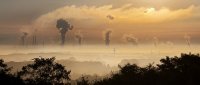
Belgian Researchers Develop Cell That Turns Smog Into Hydrogen
Scientists at two Belgian universities have created a small device that filters polluted air and simultaneously produces hydrogen, which can be stored as fuel. The proof-of-concept cell, though tiny, offers a dual approach to tackling air quality and energy challenges.

LA Scraps Gas Plant Overhaul, Redirects Funds to Renewable Energy
Los Angeles has abandoned plans to rebuild three natural gas power plants, redirecting billions toward clean energy. Mayor Eric Garcetti called the move the 'beginning of the end' for gas in the city, aligning with state renewable targets and the Green New Deal.

Cape Cod Homeowner Sues Chase Over Eroding Cliffside Mortgage
A Massachusetts man is suing JP Morgan Chase, claiming the bank should never have approved a $5.5 million mortgage on a Cape Cod mansion that sits just feet from an eroding cliff. The homeowner, who has bipolar disorder, argues he was in a manic state when he signed the loan. The bank has denied the allegations and is fighting the case.

Alaska's Alsek River Faces Drastic Shift as Glacier Melt Accelerates
New research warns that Alaska's Alsek River could shift miles off course within decades due to rapid glacier retreat, a phenomenon known as river piracy. The change threatens local communities and ecosystems that depend on the river's flow, echoing a 2016 event in Canada where a river abruptly changed direction.

Paralympian Climbs Onto Jet at London City Airport in Climate Stunt
A visually impaired former Paralympian glued himself to the roof of a British Airways plane at London City Airport, sparking a security response and highlighting Extinction Rebellion's week of airport protests. The stunt, captured on video, underscores the group's use of nonviolent civil disobedience to push for climate action.

Singapore Team Adds Wind and Heat to Virtual Reality Simulations
Researchers at the National University of Singapore have developed Ambiotherm, a VR accessory that simulates wind and temperature to enhance immersion. The device attaches to the headset and neck, offering a compact alternative to previous setups. Future work includes incorporating smell and vibrations.

Canadian Research Groups Aim for Fusion Plant Prototype by 2030
A coalition of Canadian universities and companies is seeking $125 million in government funding to build a nuclear fusion prototype by 2030, aiming to provide a scalable, low-carbon energy source that could eventually rival fossil fuels.
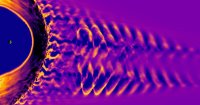
Solar Storm's Magnetic 'Song' Mapped by Helsinki Team
Researchers at the University of Helsinki, using ESA's Cluster mission data, have charted the complex magnetic waves produced when a solar storm hits Earth's magnetic field. The findings, which they converted into audible sounds, could improve our understanding of space weather and its effects on technology, as well as shed light on exoplanets.

Robotic System Prints a Full House with Utilities in Under a Day
Contour Crafting, a robotic construction system developed at USC, can now print a complete 2,500-square-foot home on-site in just 19 hours, including embedded electrical, plumbing, and air conditioning. The technology requires only four operators and aims to slash construction time and costs, with potential applications in disaster relief and commercial projects.

DNA Data Storage Breakthrough Encodes Classic Novel in Esperanto
Researchers at the University of Texas Austin have developed a new DNA encoding method that stores the entire text of 'The Wonderful Wizard of Oz' in Esperanto with unprecedented efficiency. The technique uses a lattice-like structure that allows accurate data retrieval even when strands are damaged, eliminating the need for redundant backups.