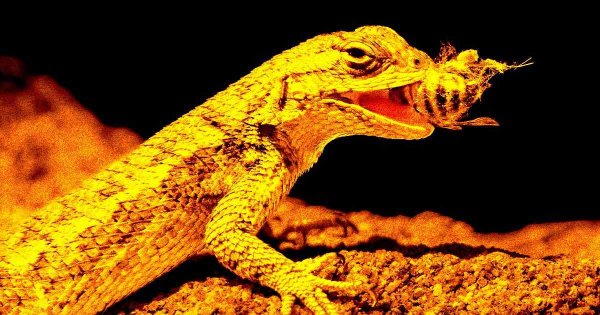
Noise from U.S. Army aircraft training at Fort Carson in Colorado is driving a rare, all-female lizard species to overeat and become less active, according to a study published this month in the journal Frontiers in Amphibian and Reptile Science.
Researchers from Utah State University found that Colorado checkered whiptails, a species that reproduces asexually, show elevated stress hormones and altered behavior when exposed to the roar of military jets. The findings add to a growing body of evidence that human-made noise can have physiological effects on wildlife, even in protected areas.
How the Study Was Conducted
The research team, led by doctoral student Megen Kepas, worked with Army officials to schedule a period of quiet followed by three days of scheduled flyovers over a 0.002-square-mile section of the 212-square-mile base. During non-flyover days, ambient noise levels ranged from 30.1 to 55.8 decibels, comparable to a humming refrigerator. When jets passed overhead, noise spiked to about 112.2 decibels, similar to the sound of an orchestra or a power saw.
Over the course of the study, scientists captured 82 individual whiptails, observing their behavior in the field before taking them to a lab for weight measurements, blood samples, and ultrasounds. The team found that cortisol levels rose in response to the flyovers, with pregnant lizards showing the most pronounced stress response.
Behaviorally, the stressed lizards compensated by eating more and moving less. Kepas noted in a press release that while the noise disturbance has measurable physiological impacts, the whiptails appear "somewhat resilient" and may adjust their feeding and movement patterns to cope.
Conservation Concerns
The Colorado checkered whiptail is listed as a "species at risk" by the U.S. Army and a "species of concern" by Colorado Parks and Wildlife, according to the study's press materials. The species consists entirely of females that reproduce via parthenogenesis, a form of asexual reproduction.
The study's authors emphasize that while the lizards show some ability to adapt, chronic noise stress could have longer-term implications for their health and reproductive success. The research was conducted with the cooperation of Fort Carson, which manages the land where the lizards live.
This is not the first time noise pollution has been linked to changes in wildlife behavior, but it is among the few studies to examine the effects on an asexual vertebrate species. The findings suggest that even short-term exposure to loud, intermittent noise can trigger measurable physiological changes in reptiles.
As military training continues in the region, the study highlights the need for wildlife managers to consider noise impacts when planning operations near sensitive habitats.