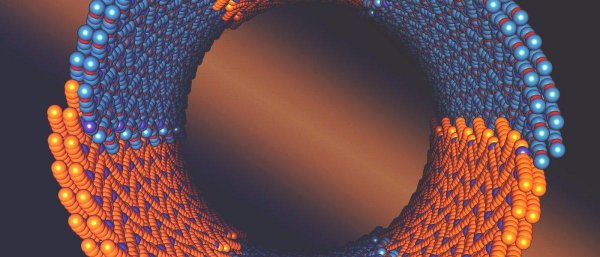
Scientists at the U.S. Department of Energy's Lawrence Berkeley National Laboratory (Berkeley Lab) have developed a new class of polymers that, when placed in water, spontaneously form hollow crystalline nanotubes. The discovery, announced by the lab, could lead to advances in targeted drug delivery and seawater desalination.
The tubes, which measure just five to ten nanometers in diameter, assemble without the need for external forces or complex nano-construction techniques. Their size can be precisely controlled by adjusting the length of the polymer chain used, a capability that has been a major hurdle in nanotechnology.
Nature-Inspired Design
The research, led by Ron Zuckermann, director of the Biological Nanostructures Facility at Berkeley Lab, focused on a type of polymer called peptoids, specifically diblock copolypeptoids. These molecules consist of two blocks—one hydrophobic (water-repelling) and one hydrophilic (water-attracting). When the blocks meet in water, they crystallize and form rings that stack into a striped pattern, creating the nanotube structure.
Using cryo-electron microscopy, the team observed that the rings stack in a regular, brick-like arrangement. The two blocks are chemically distinct but nearly identical in size, allowing them to pack together with high regularity. This natural self-assembly eliminates the need for electrostatic interactions or hydrogen bond networks, which are typically required to build nanostructures.
Potential Applications
Zuckermann noted that controlling the diameter of the nanotubes and the chemical groups inside them could determine what passes through, opening the door to new filtration and desalination technologies. The same tunability could also enable the delivery of cancer-fighting drugs directly inside cells, as the hollow interior can be engineered to carry therapeutic agents.
The breakthrough is not just about the new materials, but also about the design principles behind them. By understanding how these peptoids self-assemble, researchers can now design other polymers with similar properties, potentially accelerating the development of next-generation technologies.
Nanotubes are already used in a range of applications, from artificial retinas to transistors, but their widespread adoption has been limited by the difficulty of mass-producing them with uniform diameters. This new approach offers a scalable solution, as the polymers simply mix with water to form the tubes.
The findings were reported by Berkeley Lab, which continues to explore the potential of these self-assembling structures. While commercial applications are still in the future, the research marks a significant step forward in the field of nanotechnology.