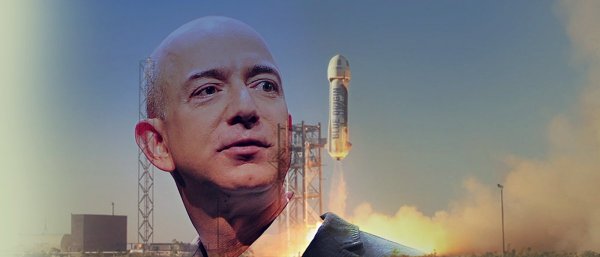
Jeff Bezos, founder of Amazon and the space company Blue Origin, has laid out a detailed vision for humanity's future in space, one that involves millions of people living and working beyond Earth. In an interview with The Washington Post, Bezos discussed not only the technological milestones his company has achieved but also the broader imperative he sees for expanding into the solar system.
Blue Origin, long known for its secrecy, has recently been more open about its progress. The company has successfully landed the same rocket four consecutive times, a key step toward its goal of developing reusable rockets to reduce the cost of space travel. This achievement underscores the company's technical capabilities as it prepares for its next major project.
The centerpiece of Blue Origin's immediate plans is the New Glenn rocket, a vehicle that Bezos says will be larger than any rocket currently in development. He announced that the New Glenn is expected to carry astronauts by the end of the decade, marking a significant milestone for the company.
Why Space Colonization Is Necessary
Bezos's vision extends far beyond the New Glenn. He foresees a future where humanity spreads across the solar system, with millions of people living and working in space. However, he cautions that this will require solving the challenge of extracting and managing resources from space, as Earth alone cannot provide the materials needed for such an expansion.
He also advocates for the use of nuclear technology in space, arguing that it could serve as a viable alternative to solar power, which diminishes in effectiveness the farther one travels from the Sun. This, he suggests, would be essential for sustaining long-term human presence in the outer solar system.
Bezos frames space colonization not merely as an aspiration but as a necessity. He argues that moving heavy industry off Earth is crucial to preserving the planet's environment. In his view, Earth would eventually be zoned primarily for residential and light industrial use, while heavy manufacturing would occur in space.
Despite the ambition, Bezos remains realistic about the timeline. When asked whether space colonization might happen in our lifetime, he responded, “Not in the near term… Eventually Mars might be amazing. But that’s a long way in the future.”
Blue Origin's recent announcements, including the successful rocket landings and the development of the New Glenn, signal a growing competitiveness in the private space industry, alongside other players like SpaceX and Virgin Galactic. As these companies continue to make strides, the prospect of space settlement, once a distant dream, is inching closer to reality.