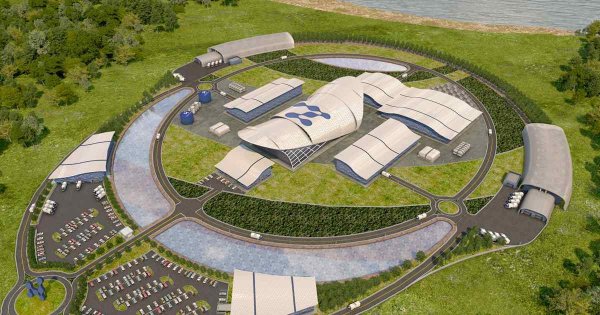
In a move that could breathe new life into America's stalled nuclear sector, federal regulators have signed off on the design of a compact nuclear reactor, the first such approval in the country's history. The U.S. Nuclear Regulatory Commission (NRC) gave the green light to NuScale Power's small modular reactor (SMR), a 65-foot-tall, nine-foot-diameter unit that proponents argue could deliver cleaner energy at a more localized scale.
The approval, reported by Scientific American, does not mean construction can begin immediately. Rather, it opens the door for utility companies to submit applications to build the reactors. Before any shovels hit the ground, however, additional safety evaluations must be completed, a process that industry watchers say could be lengthy and costly.
“I am sorry to say that what lies ahead is risky and expensive,” M. V. Ramana, a nuclear expert at the University of British Columbia, told SciAm. His caution reflects a broader sentiment among some experts who question whether the anticipated benefits of SMRs will materialize without significant hurdles.
Advocates for SMRs, including NuScale, see them as a practical bridge away from fossil fuels. The company aims to deliver its first reactors in 2027 and have them operational by 2029. If realized, these units could help reduce carbon emissions while providing a steady, local power supply—an attractive proposition for communities seeking energy independence.
Yet the road to deployment is fraught with uncertainty. Experts point to gaps in the current safety reports for the modular reactors, which have raised concerns about the adequacy of the design certification. “I don’t think future NuScale applicants will benefit from a design certification that has safety gaps in it,” the director of nuclear power safety at the Union of Concerned Scientists told SciAm, underscoring the need for rigorous oversight.
Why the Approval Matters
The NRC's decision marks a pivotal moment for the nuclear industry, which has seen little new construction in recent decades. SMRs, with their smaller footprint and lower upfront costs, are seen by some as a more flexible alternative to traditional large-scale plants. However, the path from design approval to operational reactor is long, and the financial and regulatory challenges remain formidable.
For now, the focus shifts to the next steps: completing safety evaluations, securing construction permits, and overcoming the economic hurdles that have plagued past nuclear projects. As NuScale and its potential partners move forward, the industry will be watching closely to see if this approval translates into tangible progress or becomes another cautionary tale.