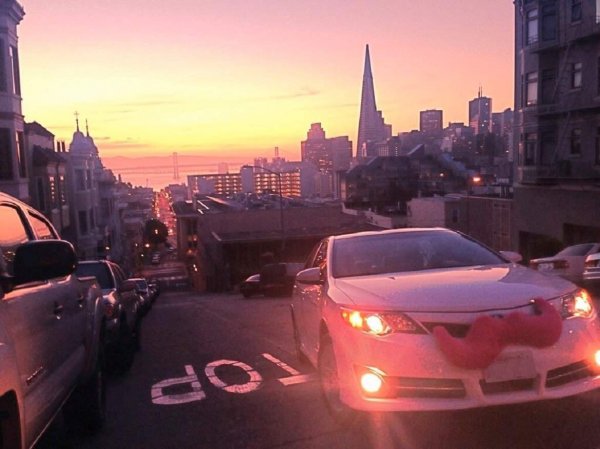
Lyft passengers in the San Francisco Bay Area may now find that their ride arrives without a human at the wheel. The ride-hailing company announced on Thursday, September 9, 2017, that a limited number of users requesting rides through its app in the region will be matched with self-driving vehicles. The service is not yet universal—most Lyft rides in the area will still be driven by people—but the rollout marks a significant step for the company's autonomous vehicle ambitions.
The self-driving capability comes not from Lyft's own engineering but from Drive.ai, a startup that provides software to retrofit existing cars for autonomous operation. This partnership allows Lyft to test autonomous technology in a real-world urban environment without the overhead of building its own system from scratch.
Lyft's interest in self-driving cars extends beyond simply replacing human drivers. The company's leadership has articulated a broader vision in which private car ownership becomes obsolete. In September 2016, Lyft president and co-founder John Zimmer published a 14-page document titled “The Third Transportation Revolution: Lyft's Vision for the Next Ten Years and Beyond” on Medium, in which he laid out his predictions for the future of transportation.
Zimmer projected that a majority of Lyft's fleet would be self-driving by 2021—a timeline that now seems ambitious given the current rollout. He also predicted that personal car ownership in America would gradually decline and largely disappear by 2025. In his vision, ride-sharing services would operate on a per-mile subscription model, similar to streaming services like Netflix, with fleets offering a variety of vehicle types to suit different needs—from workspaces to sleeping pods to entertainment lounges.
Why This Matters for the Future of Mobility
The introduction of self-driving Lyft rides in the Bay Area is not just a novelty; it represents a concrete step toward a transportation model that could reshape urban mobility. If Zimmer's predictions hold, the shift to autonomous fleets could reduce the need for parking, lower the cost of transportation, and change how people think about car ownership. However, the technology is still in its early stages, and widespread adoption faces regulatory, safety, and public acceptance hurdles.
Lyft's move also intensifies competition with rivals like Uber, which has been testing autonomous vehicles in Pittsburgh and Arizona since 2016. The Bay Area launch gives Lyft a foothold in its home market, albeit with a limited rollout. For now, the company is focused on gathering data and refining the technology, with the ultimate goal of making self-driving cars a mainstream option for its users.
As the autonomous vehicle landscape evolves, Lyft's partnership with Drive.ai highlights a growing trend of collaboration between ride-hailing platforms and specialized tech startups. Whether Zimmer's 2021 and 2025 predictions come to pass remains to be seen, but the arrival of self-driving Lyft rides in San Francisco is a clear signal that the future he envisioned is already beginning to take shape.