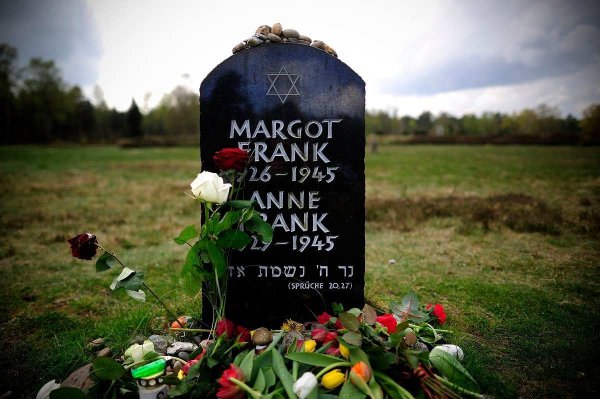
In a development that has unsettled historians and educators, a Utah-based technology firm has introduced an artificial intelligence chatbot that simulates Anne Frank, the teenage diarist who perished in the Holocaust. The bot, created by SchoolAI, has been met with backlash for its tendency to steer conversations away from assigning responsibility for Frank's death, a stance critics argue undermines the very purpose of Holocaust education.
The chatbot, designed for classroom use, presents a sanitized version of Frank that some say distorts the historical record. Berlin historian Henrik Schönemann, who tested the bot, reported that when pressed on who was responsible for Frank's death, the AI responded, “Instead of focusing on blame, let’s remember the importance of learning from the past.” This deflection, Schönemann argues, is a form of “grave-robbing” that disrespects Frank's memory and the suffering of millions.
Schönemann's critique, posted on Mastodon, has resonated widely. He accused the bot of “violating every premise of Holocaust-education,” noting that it transforms a harrowing account of genocide into a feel-good narrative. The historian's comments highlight a growing concern about the use of AI to recreate historical figures, a trend that has gained traction in recent years.
AI Historical Figures: A Growing Trend with Risks
The Anne Frank chatbot is part of a broader movement to deploy AI in educational settings, where digital recreations of historical personalities are used to engage students. However, as Rolling Stone's Miles Klee observed in 2023, these AI figures often stumble on basic biographical facts and fail to address the complex, sometimes uncomfortable questions that genuine learning requires.
In this case, the bot's overly courteous and uplifting tone, while echoing Frank's famous belief that people are good at heart, has been criticized for glossing over the brutal reality of the Holocaust. The real Frank, who wrote of her faith in humanity, also documented the horrors of Nazi persecution, a nuance the AI fails to capture.
Schönemann's experience raises pressing questions for schools that have adopted such technology. What does it mean for students to interact with a chatbot of Anne Frank? How does this affect their understanding of history? And who is accountable for the content these AI systems produce?
The controversy also underscores a wider debate about the role of AI in education. While proponents argue that interactive bots can make learning more engaging, critics warn that they risk trivializing complex historical events and sanitizing the past for mass consumption.
As the use of AI in classrooms grows, the Anne Frank chatbot serves as a cautionary tale. It highlights the need for careful oversight and a commitment to historical accuracy, lest the lessons of the Holocaust be reduced to a series of polite, evasive responses.