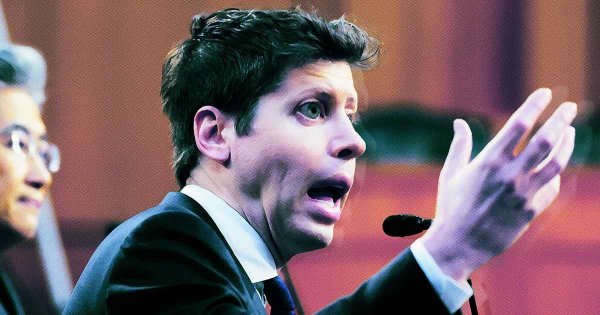
The public feud between OpenAI CEO Sam Altman and cognitive scientist Gary Marcus erupted again this week, exposing a deep divide over the trajectory of artificial intelligence. The clash, which unfolded on X (formerly Twitter), centered on whether the industry's soaring rhetoric matches its actual progress.
Marcus, a longtime critic of Altman's approach, posted a pointed question: “Sam keeps doubling down on bigger and bigger promises that are harder to keep. Did Elizabeth Holmes do the same?” He attached an image of Altman's face superimposed on a portrait of Holmes, the disgraced founder of Theranos, whose $9 billion blood-testing company collapsed after investors were misled about its technology.
The jab came hours after Altman published an essay titled “The Gentle Singularity,” in which he claimed that “humanity is close to building digital superintelligence” — a statement many experts dispute. Altman responded with a sharp retort, saying he respects Marcus's “commitment to the bit,” a reference to Marcus's persistent criticism.
At the heart of the dispute is Altman's strategy of “scaling,” which involves pouring billions into ever-larger AI systems powered by more processing power and vast datasets, often scraped without creators' consent. Marcus argues this approach fuels hype that overshadows genuine scientific inquiry.
Altman defended his record, citing OpenAI's achievements: “Hundreds of millions of happy users, 5th biggest website in the world, people talking about it being the biggest change to their productivity ever… we deliver, he keeps ordering us off his lawn.”
Marcus, however, clarified that he does not oppose OpenAI's commercial success. “I would be singing OpenAI's praises,” he wrote, “if it weren't for the hype, much of it fanned by you, that has massively overstated what the technology can do today and in the near future.” He added, “I think this hype is harming the world.”
Scaling Strategy Under Scrutiny
The scaling model has faced setbacks. Earlier this year, Chinese startup DeepSeek released a large language model comparable to OpenAI's ChatGPT but developed at a fraction of the cost, raising questions about the efficiency of massive investments. Altman's optimistic projections, including promises of “superintelligence” and “superhuman reasoning,” have also drawn skepticism from researchers who view such claims as unfounded.
The tension extends beyond rhetoric. Altman has reversed OpenAI's open-source development model and softened his stance on AI regulation, positions he once shared with Marcus. The two had previously appeared together advocating for oversight, but their paths have diverged sharply.
As the debate continues, the industry watches to see whether commercial momentum or rigorous scrutiny will shape AI's future. For now, the hype appears to dominate, but whether it can sustain itself amid mounting financial losses remains uncertain.